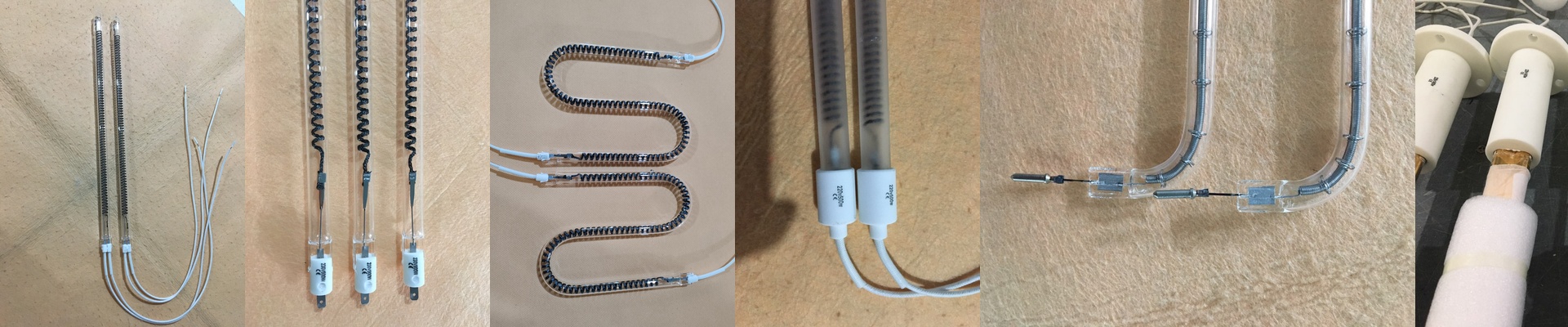
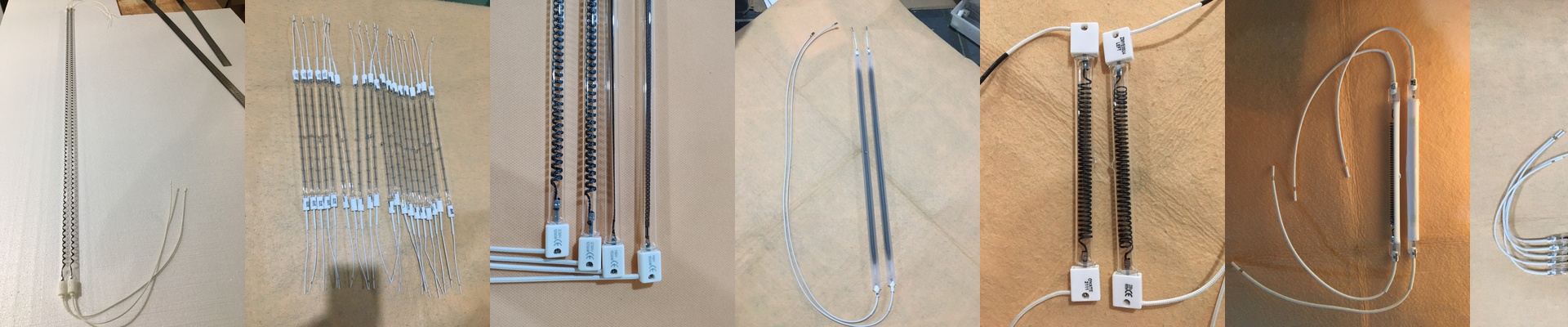
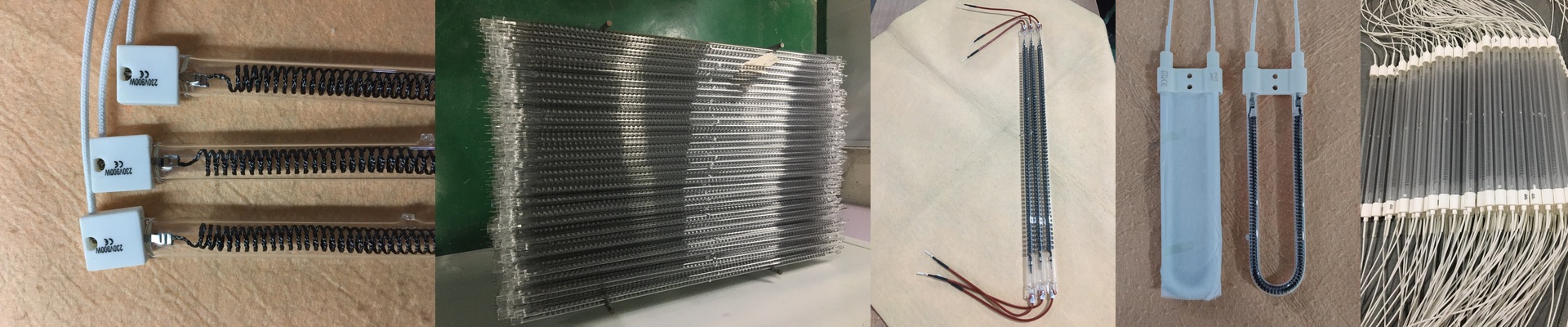
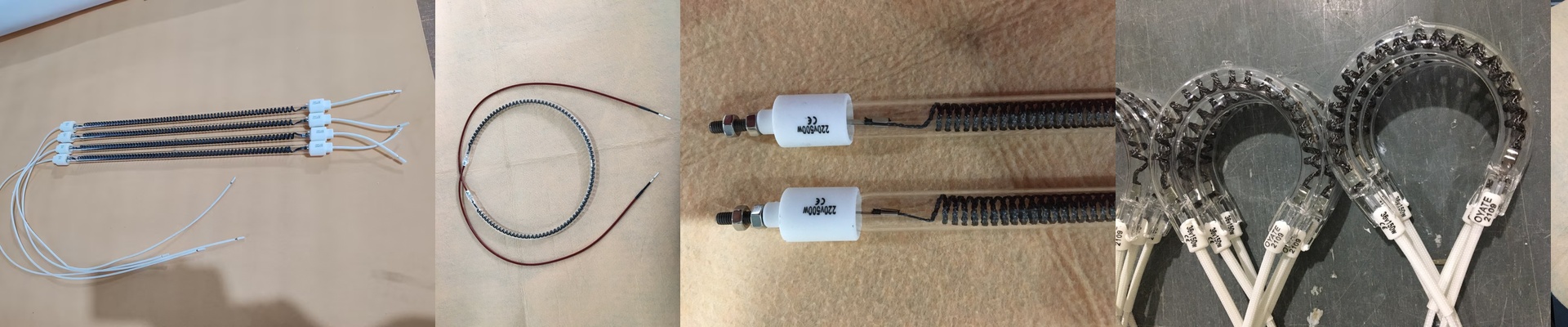
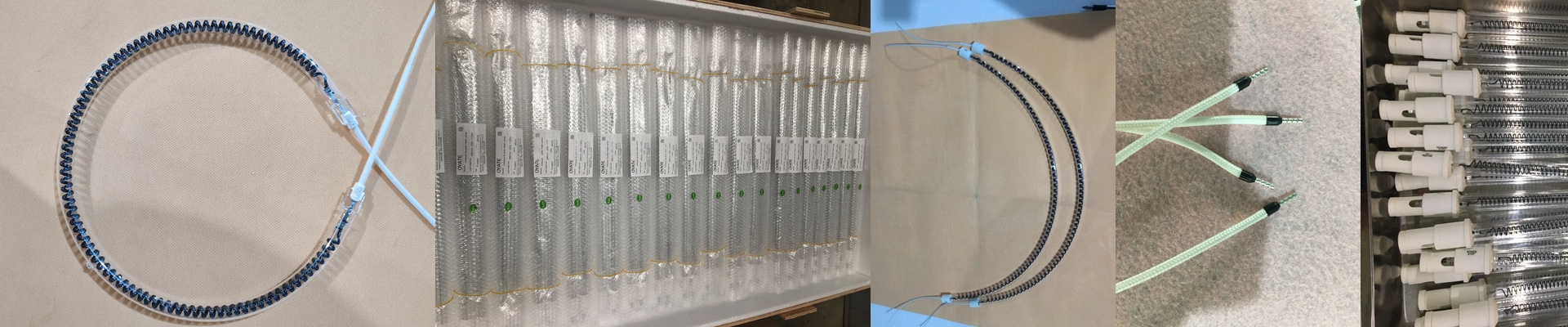
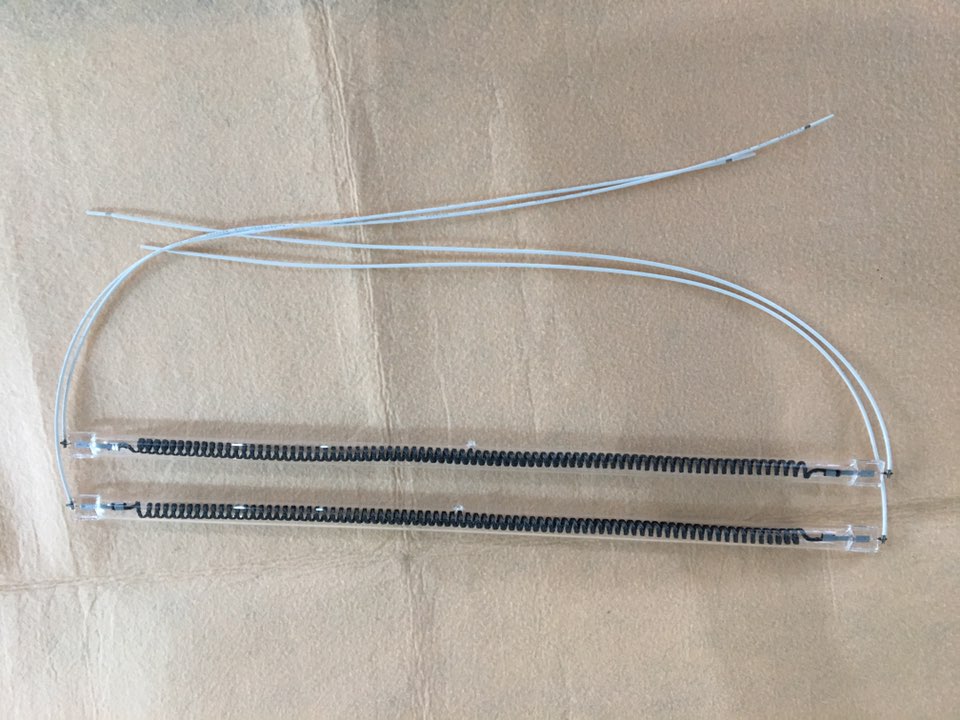
Let’s talk about this 302mm 800W carbon fiber heat lamp.
It’s built around a 302mm, 800W carbon fiber heating element, and it’s made to be a direct-fit heat source for industrial ovens and curing chambers. The whole point is to give you fast, focused heat without eating up a ton of space. We made it that specific length so it slips right into tight chambers, and the 800W rating is just the sweet spot—plenty of power, but not so much that it overwhelms your machine’s electrical load. Here’s the magic: carbon fiber elements heat up almost instantly and radiate strongly in the near- to mid-infrared range. That means the energy goes straight into what you’re working on—whether it’s paint, adhesive, a composite, or a component. You’re not wasting time and energy heating up a bunch of air. The payoff? Shorter cycles, better temperature control, and a footprint that stays out of the way.
Power, voltage, and size—why they matter.
That 302mm length wasn’t chosen by accident. It gives you enough radiating surface to spread the heat evenly across the oven, but it’s still short enough to fit standard fixtures. And the 800W draw? That’s about packing serious heat density into a small package, which is exactly what you need when space is tight but you still need to ramp up temperature fast. You’ve got to match the voltage to your machine’s supply. We build these lamps to run on standard industrial voltages, but you still need to double-check your control system’s voltage and current specs before wiring it in. Get it wrong, and you’ll either get weak performance or shorten the lamp’s life. And the speed is wild—carbon fiber elements hit operating temperature in seconds, not minutes. But there’s a trade-off: this thing runs hot. So your oven’s airflow and thermal management have to be up to the task.
What it’s made of, and what that means for you.
Carbon fiber gives you stable resistance even when temperatures swing, which helps keep heating performance consistent, run after run. The quartz envelope handles the heat and stands up to thermal shock. We also coat the envelope to manage surface temperature and prevent hot spots that can kill a lamp early. Installation stays simple thanks to the connector choice—usually an R7s base. It’s a common industrial standard, so swapping a lamp on the line is quick. No rewiring. No hunting for custom sockets. It’s a true drop-in replacement. In the real world, you get rapid heat-up, steady output, and easy maintenance. The catch is the heat density: your oven’s cooling and insulation need to match the wattage and size. Get the spec right, and this lamp keeps cycles moving without the headaches and downtime.